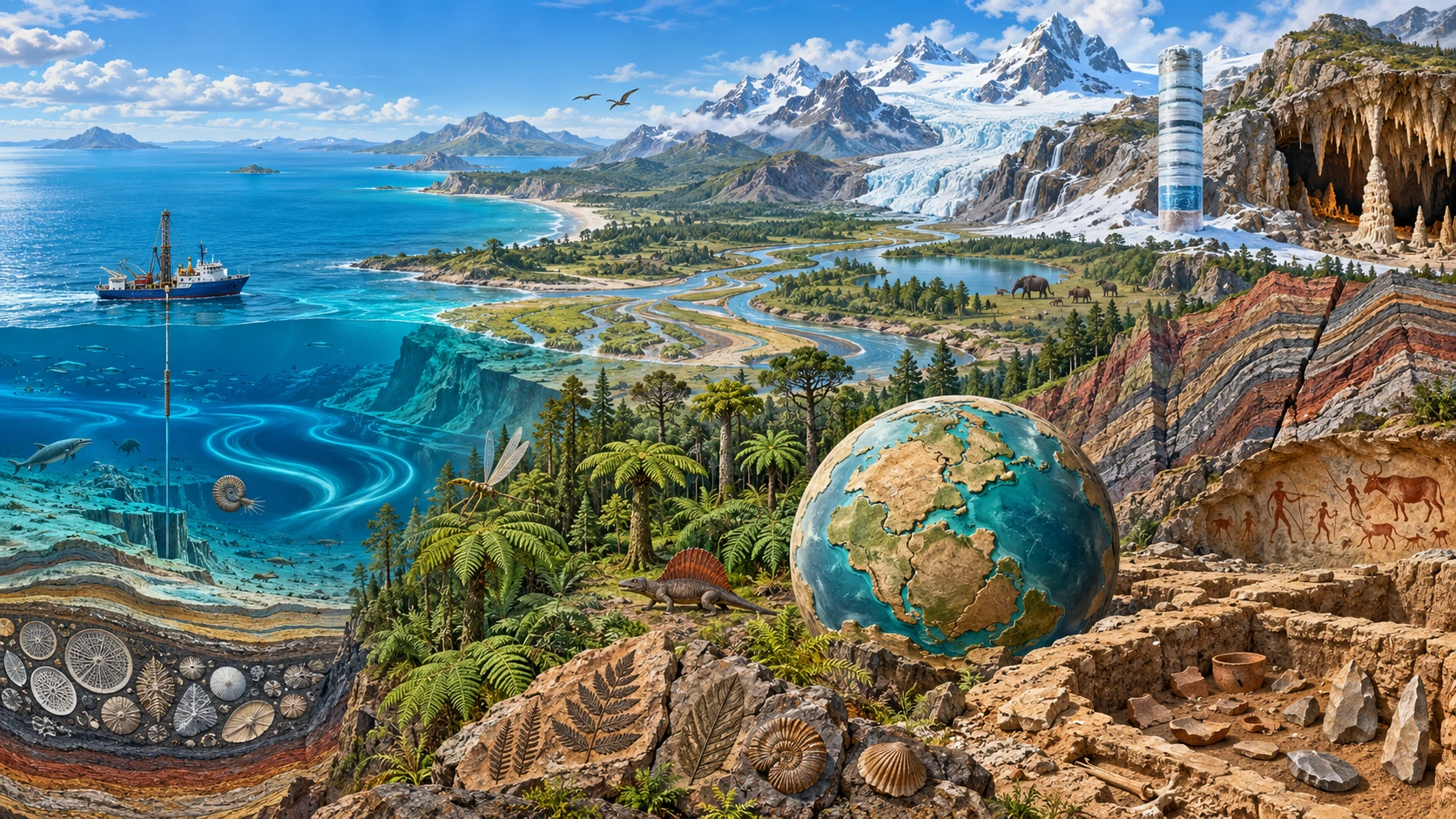
Illustration of ocean sediments, glacier ice, ancient geography, ecosystems, landscapes, folded rocks, and an archaeological excavation
Early-career researchers · India & beyond

Paleo ECR India

A shared curiosity for Earth’s past.

We connect early-career paleoscientists of Indian origin through research, conversations, and a community that crosses disciplines and borders.

Seven paleosciences · conceptual illustration
First anniversary · Special talk

Past and Present Circulation Dynamics of the Indian Ocean

Prof. Sunil Kumar Singh

Director, CSIR–National Institute of Oceanography, Goa

Saturday, 10 October 2026
11:00 AM IST · 05:30 UTC
Online · Microsoft Teams

Celebrating one year of connecting early-career researchers in paleosciences. All are welcome.

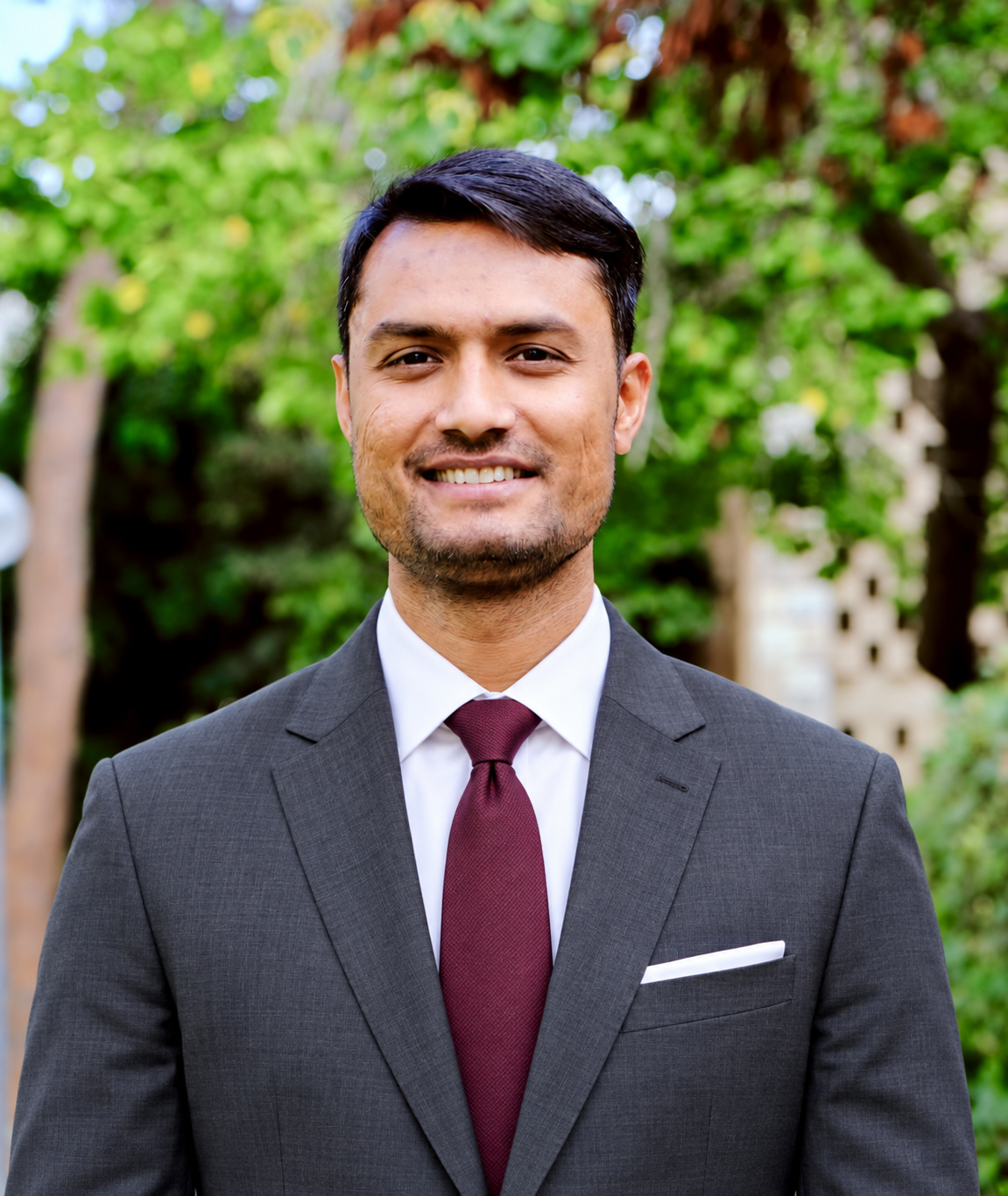
Dr. Arvind Shukla, Founding President of Paleo ECR India
Dr. Arvind ShuklaFounding President

Message from the Founding President

It gives me immense pleasure to welcome you to Paleo ECR India, a community created by and for Early Career Researchers working across the diverse fields of paleosciences such as paleoceanography, paleoclimatology, paleogeography, paleoecology, paleobiology, paleoenvironment, and paleotectonics.

As early-career researchers, we often share common challenges—from finding opportunities and building collaborations to accessing scientific networks and developing meaningful professional connections. Paleo ECR India was founded with a simple vision: to connect, support, and empower Early Career Researchers in paleosciences across India and abroad.

Through talks, scientific discussions, opportunities, outreach activities, and community initiatives, we aim to create an open and inclusive platform for knowledge exchange, collaboration, mentorship, and professional growth. Ultimately, our work as paleoscientists is connected by a common goal: to better understand Earth’s past so that we can contribute to a more sustainable and resilient future for our planet and society. Achieving this requires us to work together across disciplines, perspectives, and institutions.

As we continue to grow, I hope Paleo ECR India becomes more than a network, a community where every Early Career Researcher feels connected, supported, and empowered to contribute to the future of paleosciences.

I warmly invite you to connect with us, contribute your ideas, share your experiences, and be part of this journey.

Connecting Early Career Researchers in Paleosciences.

Dr. Arvind Shukla
A community, connected

Different archives.
Shared questions.

From ocean sediments to Antarctic ice, we study the records that reveal how our planet has changed.

Meet the network

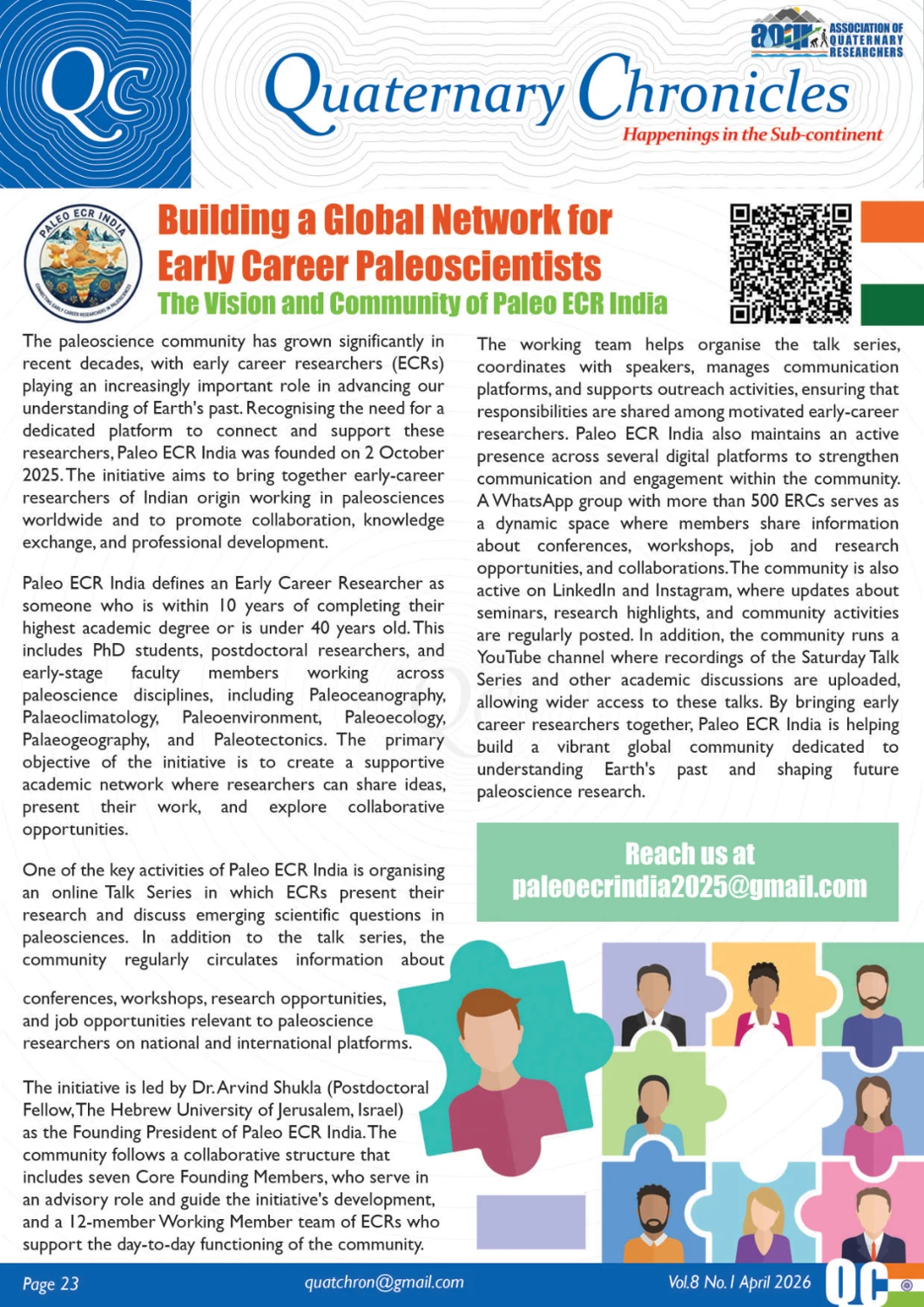
Paleo ECR India brings researchers together to share their work, discuss methods and proxies, find opportunities, and build collaborations across the paleosciences.

Founded on 2 October 2025, the network welcomes Indian early-career researchers in India and abroad.

Exchange ideas

Talks and discussions across disciplines.

Find your peers

A network across institutions and borders.

Share research

Member publications and scientific stories.

Conversations across deep time

From the talk archive

All 12 talks
Expert talk · No. 12
6 September 2026   ·   11:00–12:00 IST

Zircon Detectives: Decoding Source to Sink

Dr. Kumar Batuk Joshi

Central University of Himachal Pradesh, Kangra, India

High-resolution imaging and in situ U–Pb analyses reveal zircon age, internal structure, and geochemistry. This talk examines detrital zircon as a provenance tracer and the limitations of reconstructing source-to-sink relationships.

Saturday Talk Series · No. 11
16 August 2026   ·   11:00–12:00 IST

The Toba Supereruption and Human Prehistory: Current Debates, Challenges, and Future Directions

Dr. Sourav Mukhopadhyay

Captain Williamson Sangma State University, Tura, Meghalaya, India

The ~74 ka Toba supereruption is discussed through geological and archaeological evidence, including debates about the volcanic winter hypothesis, human resilience, methodological challenges, and adaptation.

Special talk · No. 10
27 July 2026   ·   16:00 IST

Holocene abrupt climate changes

Dr. Yama Dixit

Centre for Atmospheric Sciences, IIT Delhi

Evidence from paleoclimate archives is used to examine abrupt events against the background climate of the Holocene, their global impacts, their causes, and mechanisms of propagation.

Original flyerRecording not currently listed
Science from our members

Publication highlights

All research highlights
Highlight 06 · Ocean circulation
Nature Communications   ·   May 2026

Centennial-scale intensifications of the Atlantic Meridional Overturning Circulation during Heinrich Stadial 1

Partha Sarathi Jena, Cristiano Mazur Chiessi, Ines Beese, Martin Butzin, Bruno Dias, Marcia Carvalho Campos, Gerrit Lohmann, and Stefan Mulitza

A highly resolved proxy record and model simulations identify two short-lived AMOC intensification events during Heinrich Stadial 1, between 16.5 and 15.8 ka and around 15.4 ka. The announcement discusses rainfall shifts, northward heat transport, and atmospheric CO₂ implications.

Highlight 05 · Monsoon & lakes
Journal of Asian Earth Sciences   ·   May 2026

Late Holocene monsoon-driven variability in sedimentary organic matter and lacustrine processes from Hulas Khera Lake, Central Ganga Plain, India

Anand Rajoriya, Srinivas Bikkina, Maneesha M. E. T., Arvind Singh, et al.

A ~4.6 ka lacustrine archive uses grain size, TOC–TN, carbon and nitrogen stable isotopes, and pollen to investigate hydroclimatic transitions, organic matter sources, land use, and lake–catchment processes in the Central Ganga Plain.

Highlight 04 · Ocean circulation
Paleoceanography and Paleoclimatology   ·   March 2026

Tracking the Millennial Scale Variability of Deep Water Circulation and Lithogenic Influence in the Arabian Sea Over the Past 41 ka Through Nd Isotope

Arvind Shukla, Tapas Kumar Mishra, and Sumit Kumar Singh

A ~41 ka Arabian Sea record from SSD60-GC10 at 2,055 m water depth uses high-resolution (~400-year) Nd isotope records to examine changing deep-water influence, North Atlantic climate links, and lithogenic contributions.

Annual Report · 2025–26

A year of connecting researchers

Explore the network’s milestones and plans for the next chapter.

Original material